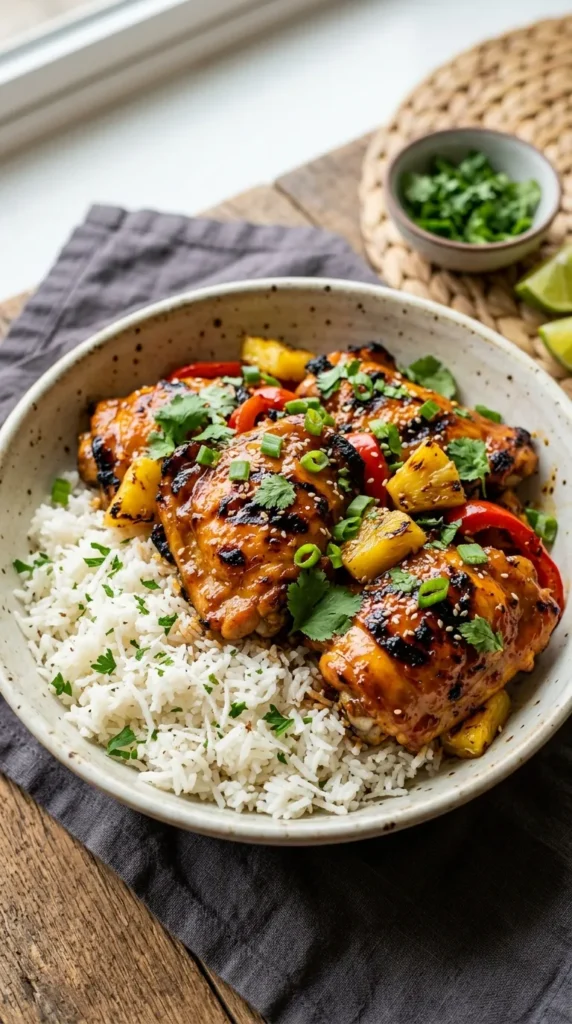
Imagine the warmth of the Pacific sun, the sound of crashing waves, and the scent of a tropical breeze right in your own kitchen. This Easy Hawaiian Chicken with Coconut Rice Recipe is designed to transport your taste buds to an island paradise without requiring a plane ticket.
By combining the sweet, acidic punch of pineapple with the creamy, comforting texture of coconut-infused jasmine rice, you create a meal that is both refreshing and deeply satisfying. This dish strikes a perfect balance between a savory weeknight dinner and an impressive weekend feast for guests.
Table of Contents
Table of Contents
Whether you are looking for a way to liven up your standard chicken routine or you need a foolproof meal prep option, this Hawaiian Chicken with Coconut Rice offers a vacation-at-home experience in every bite. We have focused on high-quality ingredients and specific techniques to ensure that your chicken is perfectly glazed and your rice is fluffy rather than gummy.
What Makes this Hawaiian Chicken Authentic?
While Hawaiian cuisine is a beautiful melting pot of Polynesian, Asian, and Western influences, the flavor profile of this dish is heavily inspired by Huli-Huli style cooking. The term huli means to turn, referring to how the chicken was traditionally rotisserie-grilled over wood fires and turned constantly while being basted in a sweet and salty glaze.
The heart of this flavor comes from the marinade, which typically features a base of soy sauce, ginger, garlic, and pineapple juice. The sweetness of the pineapple combined with the umami of the soy creates a sticky, caramelized coating that defines the island experience. By serving it alongside coconut rice, we lean into the tropical bounty of the islands, creating a cohesive plate that feels like it came straight from a North Shore plate-lunch stand.
The Science of the Perfect Pineapple Marinade
One of the secrets to the incredible texture of this chicken is the science behind the pineapple juice. Fresh pineapple contains a powerful enzyme called bromelain. This enzyme acts as a natural meat tenderizer by breaking down proteins, making the chicken incredibly soft.
However, there is a technical warning every home cook should know: do not let the chicken marinate for more than 12 hours. Because bromelain is so effective, over-marinating can actually cause the muscle fibers to break down too much, resulting in a mushy or grainy texture. For the best results, aim for a window of 2 to 6 hours. This allows the flavors to penetrate deep into the meat while maintaining a satisfying, firm bite.
Ingredients You Will Need
To achieve that signature tropical flavor, you will need a few pantry staples and a couple of fresh items.
- 1.5 pounds of boneless, skinless chicken thighs or breasts.
- 1 cup of canned pineapple juice (fresh is also excellent if available).
- 1/2 cup of soy sauce (use Tamari for a gluten-free version).
- 1/3 cup of light brown sugar, packed.
- 2 cloves of fresh garlic, minced.
- 1 tablespoon of fresh ginger, grated.
- 1 tablespoon of sesame oil.
- 1.5 cups of Jasmine rice.
- 1 can (13.5 oz) of full-fat coconut milk.
- 1/2 cup of water.
- 1/2 teaspoon of salt.
- 1 tablespoon of coconut oil or vegetable oil.
- Fresh cilantro and green onions for garnish.
- Fresh pineapple rings or chunks for searing.
Best Cuts of Chicken: Thighs vs. Breasts
When making this Hawaiian Chicken with Coconut Rice, the choice of meat can change the final result. Chicken thighs are highly recommended because they contain more fat, which keeps them juicy and tender even under high heat or on the grill. They also hold up better to the long simmering or searing required to get a deep glaze.
If you prefer a leaner option, chicken breasts work well too. To prevent them from drying out, ensure you do not overcook them. Slicing the breasts into even-sized cutlets or large chunks can help them cook quickly and evenly, ensuring they stay moist while the exterior caramelizes.
Choosing the Right Coconut Milk
For the rice, always reach for full-fat canned coconut milk. The lite versions often contain too much water and not enough coconut fat, which results in a less flavorful and less creamy texture. The fat in the coconut milk is what provides that luxurious mouthfeel and the distinct tropical aroma that makes the rice stand out.
How to Make Fluffy Coconut Rice (Not Mushy)
Many home cooks struggle with coconut rice because it can easily become gummy or stick to the bottom of the pot. The key is in the preparation of the grain.
The Secrets to Rice Texture
First, you must rinse your Jasmine rice thoroughly under cold water until the water runs clear. This removes the excess surface starch that causes clumping. Second, we recommend a technique called toasting. Before adding any liquid, heat a small amount of coconut oil in your pot and sauté the dry, rinsed rice for 2 to 3 minutes. This coats every grain in fat, which acts as a barrier and ensures the grains stay separate and fluffy after cooking.
The Water-to-Coconut Milk Ratio
Using only coconut milk can make the rice too heavy and oily. We find that a combination of full-fat coconut milk and a splash of water provides the perfect balance. This allows the rice to absorb enough moisture to become tender while retaining its structural integrity.
Step-by-Step Instructions
Step 1: In a large bowl or a gallon-sized zip-top bag, whisk together the pineapple juice, soy sauce, brown sugar, minced garlic, grated ginger, and sesame oil until the sugar has mostly dissolved.
Step 2: Place your chicken pieces into the marinade, ensuring every piece is fully submerged. Seal the bag or cover the bowl and refrigerate for at least 2 hours, but no longer than 12 hours.
Step 3: While the chicken is marinating, prepare the rice. Rinse the Jasmine rice in a fine-mesh sieve until the water is no longer cloudy.
Step 4: Heat one tablespoon of coconut oil in a medium heavy-bottomed saucepan over medium heat. Add the rinsed rice and stir constantly for about 2 minutes until the grains look slightly translucent at the edges and smell toasted.
Step 5: Pour the coconut milk, water, and salt into the saucepan with the rice. Bring the mixture to a gentle boil, then immediately reduce the heat to the lowest setting. Cover the pot with a tight-fitting lid and simmer for 15 to 18 minutes without lifting the lid.
Step 6: Once the rice is cooked, remove the pot from the heat and let it sit, covered, for another 10 minutes. This allows the steam to finish the cooking process perfectly. Fluff with a fork just before serving.
Step 7: Heat a large skillet or grill pan over medium-high heat with a small amount of oil. Remove the chicken from the marinade, but do not discard the liquid.
Step 8: Place the chicken in the hot pan. Sear for 5 to 7 minutes per side, or until the internal temperature reaches 165 degrees Fahrenheit. Because of the sugar in the marinade, the chicken will brown quickly, so monitor the heat to prevent burning.
Step 9: In a separate small saucepan, pour the remaining marinade and bring it to a rolling boil. Let it simmer for 5 to 10 minutes until it reduces into a thick, syrupy glaze.
Step 10: During the last 2 minutes of cooking the chicken, toss in a few fresh pineapple rings or chunks to the skillet to get them charred and warm.
Step 11: Brush the thickened glaze over the cooked chicken and pineapple. Serve the chicken over a generous scoop of the fluffy coconut rice, garnished with fresh cilantro and sliced green onions.
Tips for the Best Tropical Glaze
Getting that perfect ‘char’ without burning the glaze is an art. The sugar in the pineapple juice and brown sugar will caramelize rapidly. If you notice the pan getting too dark too quickly, turn the heat down to medium and add a tablespoon of water or extra pineapple juice to deglaze the pan. This helps pick up those flavorful browned bits (the fond) and incorporates them back into the sauce.
For an extra layer of flavor, you can add a pinch of red pepper flakes to the glaze if you enjoy a sweet and spicy kick. The heat from the pepper balances the sweetness of the fruit beautifully.
Variations and Substitutions
This recipe is incredibly versatile. If you are looking for a keto-friendly version, you can swap the Jasmine rice for cauliflower rice. Simply sauté the cauliflower rice with a splash of coconut milk and lime zest. For the marinade, use a brown sugar substitute like erythritol or monk fruit and replace the pineapple juice with a smaller amount of pineapple extract or a splash of apple cider vinegar and lime.
If you are out of chicken, this marinade works exceptionally well with BEEF or even firm tofu. If using BEEF, choose a cut like flank steak or sirloin tips and sear them quickly over high heat to keep them tender. If you prefer seafood, shrimp is a fantastic alternative that only needs a few minutes of marinating and a quick sear.
What to Serve with Hawaiian Chicken
To round out this meal, consider serving a fresh side dish that cuts through the richness of the coconut rice. A simple cucumber salad with rice vinegar and sesame seeds is a great choice. You could also serve steamed bok choy or a tropical slaw made with shredded cabbage, mango, and a lime-cilantro dressing.
If you enjoy preparing meals ahead of time, this dish is a fantastic candidate for your weekly routine. If you love organizing your week with nutritious options, you might also enjoy our Easy Meal Prep Breakfast Bowls: Healthy Recipe to keep your mornings just as organized as your dinners.
Storage and Meal Prep Tips
This Hawaiian Chicken with Coconut Rice stays fresh in the refrigerator for up to 4 days when stored in airtight containers. It is an ideal meal prep dish because the flavors of the marinade continue to meld over time.
When reheating, be aware that coconut rice can firm up significantly when cold. To restore its fluffiness, add a tiny splash of water or coconut milk before microwaving it. Cover the dish with a damp paper towel to create steam, which will help soften the rice grains without drying them out.
Frequently Asked Questions
Can I use canned pineapple juice instead of fresh?
Yes, canned pineapple juice is actually preferred by many because the heat-treating process during canning stabilizes the enzymes. While fresh juice is delicious, canned juice provides a more consistent result for the marinade without the risk of over-tenderizing the meat too quickly.
How do I prevent the coconut rice from sticking to the bottom of the pot?
The most important step is using a heavy-bottomed pot and keeping the heat on the lowest possible setting. Also, resist the urge to peek! Keeping the lid closed traps the steam, which is what actually cooks the rice. If you lift the lid, the steam escapes, and the rice at the bottom will likely burn before the top is finished.
Is Hawaiian Chicken gluten-free?
This recipe can easily be made gluten-free by substituting the soy sauce with Tamari or liquid aminos. Always check the labels on your pineapple juice and coconut milk to ensure no thickeners containing gluten have been added.
Can I make this in an Instant Pot?
You certainly can. For the rice, use a 1:1 ratio of rice to liquid (using a mix of coconut milk and water). For the chicken, you can use the sauté function to sear the meat, then pressure cook it for 8 to 10 minutes with the marinade. However, you will still need to reduce the sauce afterward to get that thick, sticky glaze.
How long does leftover coconut rice stay fresh?
Leftover rice will stay fresh for up to 4 days. Because of the fat content in the coconut milk, it may look solid when cold. Just follow the reheating tips mentioned above to bring it back to life.
For more inspiration on tropical flavors and easy weeknight wins, don’t forget to check out the original Hawaiian Chicken with Coconut Rice for additional serving ideas.
PrintEasy Hawaiian Chicken with Coconut Rice
- Total Time: 40 minutes
- Yield: 4 servings 1x
Description
A delicious and tropical meal featuring tender glazed chicken marinated in pineapple and soy, served over creamy, fluffy coconut jasmine rice.
Ingredients
1.5 lbs boneless skinless chicken thighs
1 cup canned pineapple juice
1/2 cup soy sauce
1/3 cup light brown sugar
2 cloves garlic, minced
1 tbsp fresh ginger, grated
1 tbsp sesame oil
1.5 cups Jasmine rice
1 can (13.5 oz) full-fat coconut milk
1/2 cup water
1/2 tsp salt
1 tbsp coconut oil
Instructions
Whisk together pineapple juice, soy sauce, brown sugar, garlic, ginger, and sesame oil in a bowl.
Marinate the chicken in the mixture for 2 to 6 hours in the refrigerator.
Rinse the jasmine rice under cold water until the water runs clear.
Heat coconut oil in a pot and toast the dry rice for 2 minutes over medium heat.
Add coconut milk, water, and salt to the rice; bring to a boil, then simmer covered on low for 18 minutes.
Let the rice rest covered for 10 minutes before fluffing with a fork.
Sear the chicken in a hot skillet for 5-7 minutes per side until cooked through.
Simmer the remaining marinade in a small pan until it thickens into a glaze.
Brush the glaze over the chicken and serve over the coconut rice with fresh pineapple and cilantro.
Notes
Do not marinate chicken longer than 12 hours or the texture will become mushy. Always use full-fat coconut milk for the best flavor.
- Prep Time: 15 minutes
- Cook Time: 25 minutes
- Category: Main Course
- Method: Stovetop/Grill
- Cuisine: Hawaiian-inspired
Nutrition
- Serving Size: 1 chicken thigh with 3/4 cup rice
- Calories: 580
- Sugar: 18g
- Sodium: 1150mg
- Fat: 22g
- Carbohydrates: 62g
- Fiber: 2g
- Protein: 34g